
In the old days of B2B, content marketing was a "Top of Funnel" activity. You wrote a few blog posts, gathered some email addresses with a PDF, and handed the "leads" to sales.
In 2026, that model is broken.
With the rise of AI-generated noise and "Dark Social" (where buyers research in private communities and Slack groups), 70% of the B2B buying journey is now completed before a prospect ever talks to your sales team.
This means your content isn't just "marketing"—it is your salesperson, your subject matter expert, and your brand's reputation, all working 24/7.
The Yanatiev Definition: Revenue-First Content
B2B content marketing is the strategic process of creating and distributing high-authority information designed to solve customer problems, build trust, and accelerate the sales cycle.
Unlike B2C (which often relies on emotion and impulse), B2B content marketing is an exercise in business logic. Its goal is to make your product or service the only logical solution to a high-stakes business problem.
Why "Content-Led Growth" Beats "Content Production"
Most companies suffer from "Random Acts of Content." They publish because they feel they have to, not because they have a perspective. At Yanatiev.com, we advocate for Content-Led Growth:
- The Content Production Way: Targeting high-volume keywords to get "traffic" that never converts.
- The Content-Led Growth Way: Targeting specific customer pain points and "Authority Gaps" to drive pipeline and MRR.
Comparison: Strategic vs. Legacy B2B Content
| Feature | Content-Led Growth (New) | Legacy Marketing (Old) |
|---|---|---|
| Core Metric | Pipeline & Sales Velocity | Traffic & Impressions |
| Source of Truth | SMEs & Internal Data | Keyword Research Tools |
| AI Strategy | AI as a Research Partner | AI as the Ghostwriter |
| Main Focus | Solving Problems | Gaining Clicks |
The 3 Pillars of a Modern B2B Content Strategy
To win in a saturated market, your strategy must be built on these three foundations:
1. Subject Matter Authority (The Death of Generalists)
AI can write a "5 Tips for [X]" article. It cannot write about the specific nuances of your proprietary framework or the lessons you learned losing a $1M deal. Your content must be SME-led (Subject Matter Expert). If it doesn’t contain "uncopyable" insights, it’s just noise.
2. High-Intent Distribution
"Build it and they will come" is a lie. A blog post is just a raw asset. A strategy defines how that asset is atomized into:
- LinkedIn thought leadership for your founders.
- Nurture sequences for your high-intent leads.
- Sales enablement decks for your AE team.
3. The Trust-Based Funnel
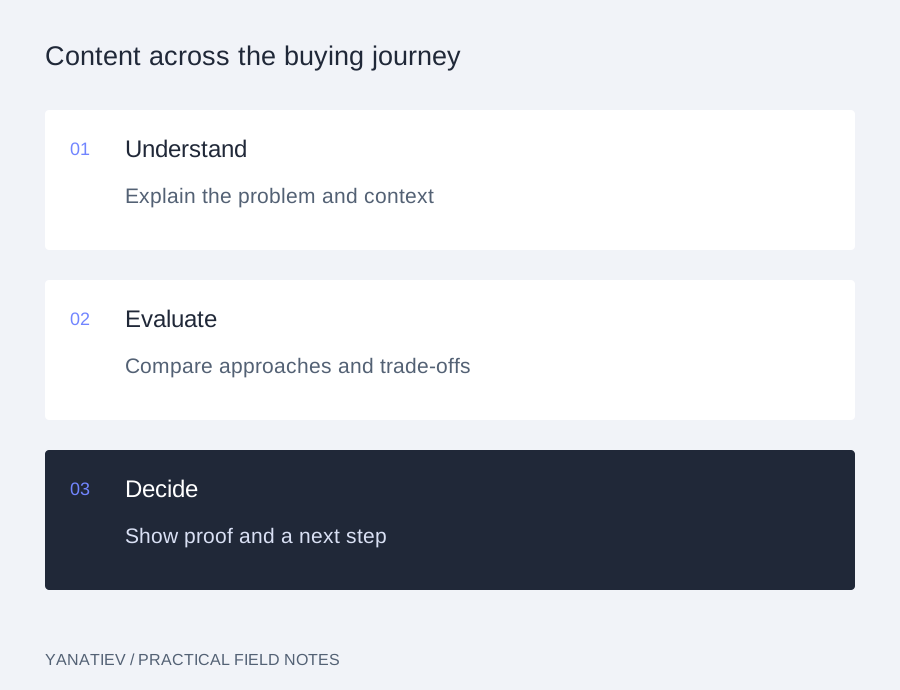
- ToFu (Awareness): Challenges the status quo (e.g., "Why your current SEO strategy is killing your CAC").
- MoFu (Consideration): Provides frameworks and "how-to" depth.
- BoFu (Decision): Case studies and ROI calculators that prove your value.
B2B Content Examples That Actually Drive Revenue
- Original Research: Surveying 500 CEOs in your niche and publishing the "2026 State of [Industry]" report. This earns backlinks and makes you the "Source of Truth."
- Product-Led Content: Showing exactly how your software solves a specific problem using screenshots and workflows (Example: Stripe or Gong).
- The "Anti-Hero" Narrative: Taking a controversial stance against a common industry practice to attract your ideal customer and repel the wrong ones.
How to Audit Your B2B Content for 2026
Ask yourself these three questions:
- The Logo Test: If I removed my logo from this article, could a competitor post it on their site without changing a word? (If yes, it lacks a Point of View).
- The Revenue Test: Can I track at least one deal in my pipeline back to a content touchpoint?
- The Human Test: Does this sound like it was written by an executive who has actually done the work, or a prompt-engineered AI?
Ready to build a Content-Led Revenue Engine?
Stop publishing "fluff" and start building authority. Whether you need a full Content Audit or a Fractional CMO to lead your team, let’s talk.
Book a Free Strategy Consultation
Frequently asked questions
What distinguishes B2B content from general publishing?
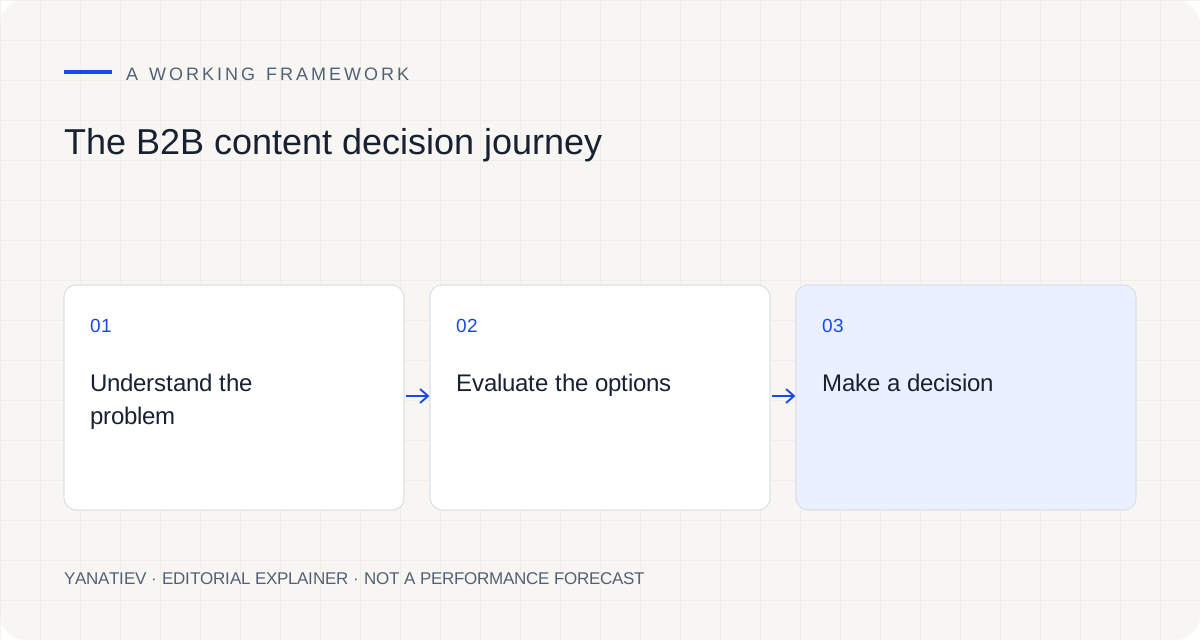
B2B content helps a defined buyer understand a problem, evaluate options and make a decision, using evidence connected to the actual offer.
How should a B2B content programme be measured?
Review relevant discovery, engagement with decision resources and qualified enquiries separately. Pageviews alone do not establish commercial value.