
What is Content Strategy (Really)?
At Yanatiev.com, we define content strategy as the high-level architecture that connects your business goals to your customer's pain points. It is the roadmap for how your brand will use information to earn trust, solve problems, and drive conversions.
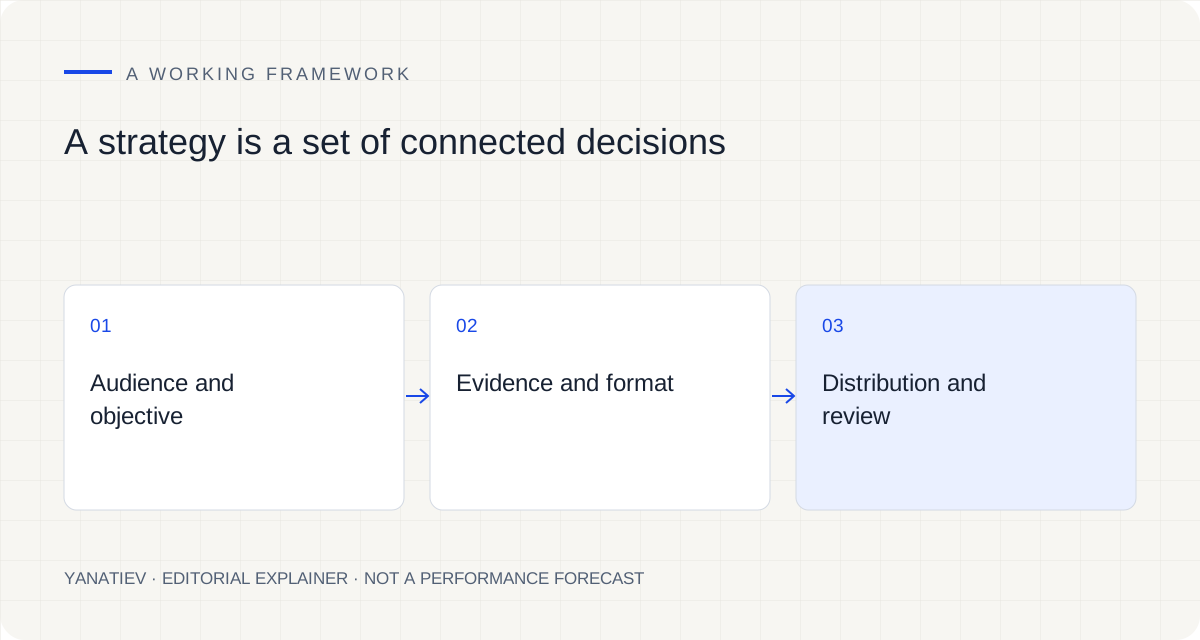
A strategy isn't a "to-do" list; it’s a framework for decision-making.
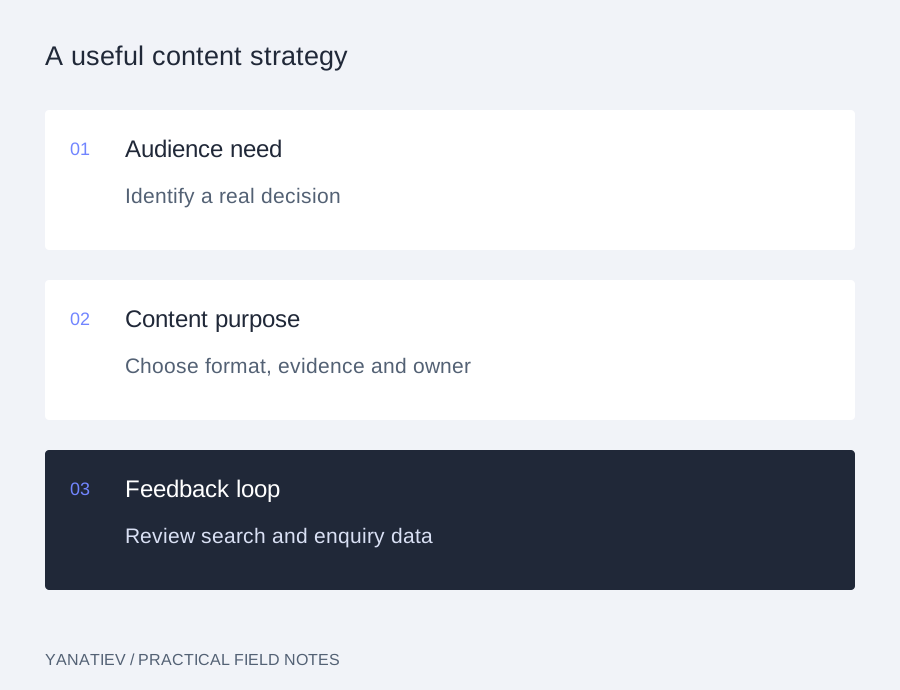
The 3 Pillars of a Content-Led Growth Strategy
If you want your content to move the needle, it must stand on these three pillars:
- The Authority Gap: Identifying the specific questions your customers have that your competitors are too lazy to answer honestly.
- High-Intent Distribution: Prioritizing "dark social," LinkedIn authority, and niche communities over just hoping for SEO rankings.
- The Conversion Path: Defining the exact path a reader takes from "problem-aware" to a booked demo.
3 World-Class Content Strategy Examples
1. The "Category Creator" (Gong)
Gong didn’t just write about sales; they used their own data to tell salespeople what actually works in a call.
- The Lesson: Use your unique internal data to create "Uncopyable Content."
2. The "Personal Brand Engine" (Refine Labs)
By giving away their "secrets" for free on LinkedIn, they built so much trust that by the time a lead reached out, the sale was already closed.
- The Lesson: Distribution isn't an afterthought; it’s the heart of the strategy.
3. The "Educational Utility" (Stripe)
Stripe’s documentation is so good it is the industry standard. They don’t "sell" payments; they enable developers to build.
- The Lesson: Be so useful that your customers can't do their jobs without your resources.
Ready to stop "doing content" and start driving growth?
Book a Strategy Audit with Bogdan Yanatiev today.
| Feature | Strategic Content (Yanatiev) | Tactical Content (The Old Way) |
|---|---|---|
| Primary Goal | Trust & Pipeline | Traffic & Pageviews |
| Topic Selection | Customer Pain Points | High-Vol Keywords |
| Production | Expert-Led (SME) | Outsourced AI Fluff |
| Measurement | Revenue Attribution | Vanity Metrics (Likes) |
Frequently asked questions
What belongs in a content strategy?
Define the audience, business objective, priority questions, evidence requirements, formats, distribution, ownership and review process.
Is a publishing calendar enough?
No. A calendar schedules work; a strategy explains why the work matters and how its value will be evaluated.