
Drupal is a powerful, flexible CMS used by governments, universities, enterprises, and large content driven platforms. It is known for its scalability, security, and customization options. At the same time, Drupal’s flexibility means SEO success depends heavily on how the system is configured and used.
Search engines and AI systems evaluate clarity, structure, and accessibility. In Drupal, SEO performance is shaped by content architecture, technical configuration, and disciplined publishing workflows.
This guide explains SEO best practices for Drupal CMS, with a focus on structure, intent, performance, and AI friendly optimization for Google, Bing, and Gemini style search experiences.
This article is written for developers, SEO specialists, content editors, and organizations running Drupal at scale.
Why SEO in Drupal Requires Discipline
Drupal gives teams deep control over content types, fields, and site architecture. This power can either support excellent SEO or create serious issues if misused.
Common Drupal SEO challenges include:
- Overly complex content structures
- Duplicate content from views and parameters
- Inconsistent metadata across content types
- SEO treated as a module problem rather than a system concern
SEO in Drupal works best when it is planned as part of the overall architecture.
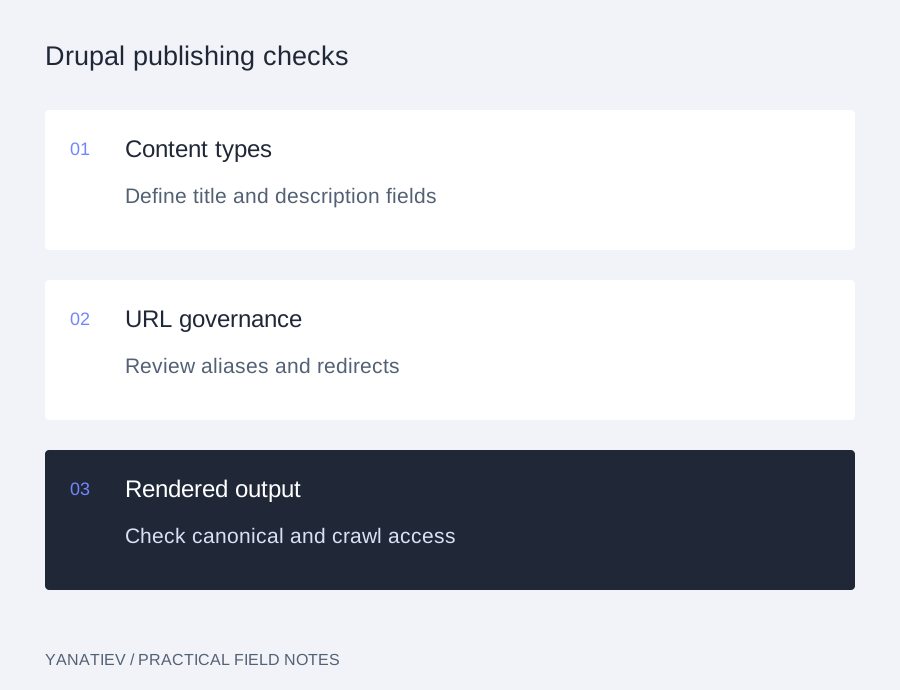
How Search Engines and AI Understand Drupal Sites
Structure Drives Understanding
Modern search engines and AI systems rely on structure to understand content meaning. Drupal’s strength lies in its ability to model content precisely.
Key signals include:
- Clear content types and fields
- Logical heading hierarchy
- Clean URLs
- Consistent internal linking
When Drupal content is well structured, search engines can interpret it with confidence.
AI Search Prefers Predictable Output
AI driven search systems work best with stable, crawlable HTML. Over reliance on dynamic rendering, hidden blocks, or user specific variations can reduce AI visibility.
Drupal sites should prioritize predictable, indexable output for core content.
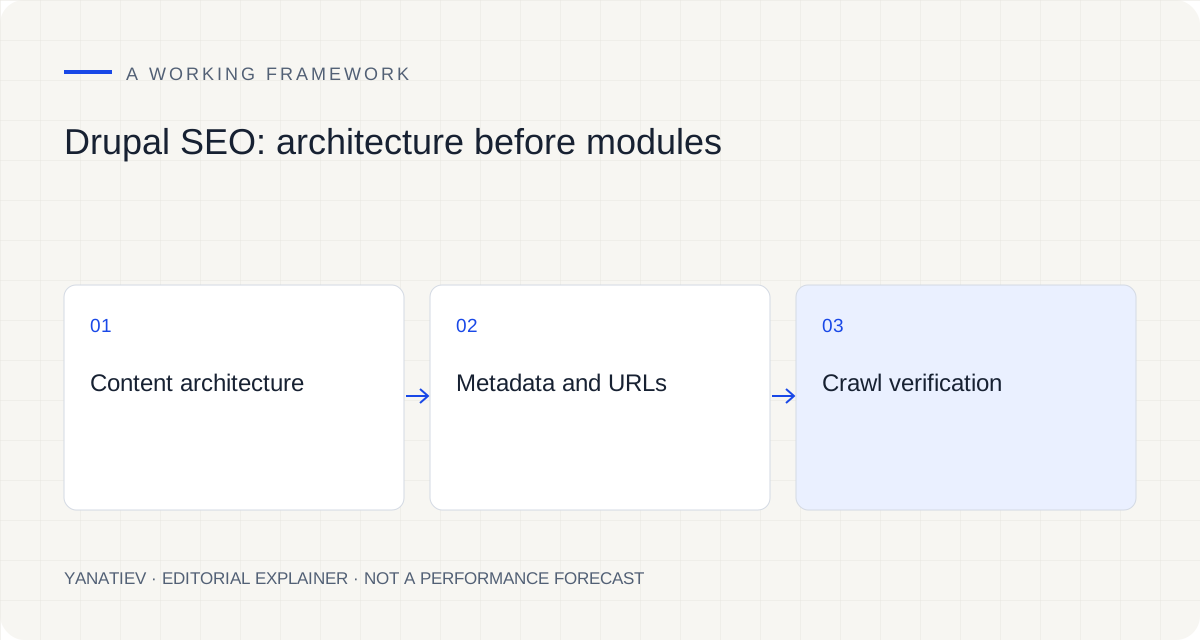
Content Architecture SEO Best Practices in Drupal
Design SEO Friendly Content Types
Every Drupal content type should include:
- SEO title field
- Meta description field
- Clean URL alias configuration
- Intro or summary field
These elements should be standardized across the site.
Use Fields Instead of Long Body Text
Drupal excels when content is broken into meaningful fields. Use separate fields for:
- Introductions
- Main content
- FAQs
- Calls to action
This improves consistency, reusability, and SEO clarity.
One Clear Purpose Per Node
Each node should focus on one primary topic and intent. Mixing multiple topics reduces relevance and confuses both users and AI systems.
Aligning Drupal Content With Search Intent
Define Intent Early
Before creating content, define whether it serves:
- Informational intent
- Commercial intent
- Navigational intent
Drupal content types should align with these intents rather than mixing them.
Avoid Overloaded Pages
It is better to create multiple focused nodes connected by internal links than one long page trying to rank for everything.
This approach builds topical authority and improves crawlability.
On Page SEO Best Practices for Drupal Sites
Titles and Headings
Ensure:
- One H1 per page
- Logical H2 and H3 hierarchy
- Titles written for clarity, not keyword density
Drupal themes should enforce consistent heading structures.
Content Writing Principles
High performing Drupal content:
- Answers questions directly
- Uses clear language
- Avoids unnecessary complexity
- Provides real value
SEO improves when content is written for understanding.
Internal Linking Strategy
Drupal supports strong internal linking through menus, views, and manual links. Use internal links to:
- Connect related content
- Improve crawl paths
- Distribute authority across the site
Technical SEO Considerations for Drupal
URL Management and Aliases
Use clean, descriptive URL aliases and avoid exposing internal paths. Control indexing of filtered and paginated views carefully.
Performance and Core Web Vitals
Drupal sites can become heavy if not optimized. Focus on:
- Caching strategies
- Image optimization
- Reducing unnecessary modules
- Efficient theme development
Performance directly impacts rankings and user experience.
Indexing and Crawl Control
Use robots rules, canonical tags, and noindex settings strategically to avoid duplicate content issues.
SEO Friendly Content Strategy for Drupal
Build Topic Based Structures
Drupal works well for large topic ecosystems:
- Core landing pages for main themes
- Supporting content for subtopics
- Strong internal linking via views and menus
This structure supports both traditional SEO and AI overview results.
Use FAQs for Visibility
FAQ sections help:
- Address real user questions
- Improve featured snippet eligibility
- Increase AI overview inclusion
Ensure FAQs are crawlable and not hidden behind interactions.
Common SEO Mistakes in Drupal Projects
- Treating SEO as a module checklist
- Creating too many similar content types
- Ignoring duplicate content from views
- Publishing without metadata
- Over engineering site structure
Avoiding these mistakes often leads to immediate SEO gains.
Measuring SEO Success for Drupal Websites
Use:
- Google Search Console for indexing and performance
- Analytics tools for engagement
- SEO platforms for large scale monitoring
Regular audits are essential for Drupal based sites due to their complexity.
Frequently Asked Questions
Is Drupal good for SEO?
Yes. Drupal is excellent for SEO when content architecture and technical configuration are handled correctly.
Does Drupal handle SEO automatically?
No. Drupal provides tools and flexibility, but SEO success depends on planning and execution.
Can Drupal sites rank in AI generated search results?
Yes. Well structured Drupal content performs well in AI driven search when content is crawlable and stable.
Is Drupal suitable for enterprise SEO?
Yes. Drupal is widely used for enterprise and government SEO projects due to its scalability and control.
Do I need many SEO modules in Drupal?
No. A few well chosen modules combined with strong architecture are more effective than many overlapping tools.
Final Thoughts
SEO best practices for Drupal CMS are about structure, discipline, and clarity at scale. When content types, fields, and technical foundations are designed with SEO in mind, Drupal becomes a powerful platform for sustainable organic growth.
Drupal gives you control. SEO success comes from how responsibly and strategically that control is used.