
An AI visibility audit records how a brand and its content appear across a defined set of buyer questions, platforms and observation dates. It should distinguish brand mentions, linked citations, factual accuracy and referral visits. Those measures answer different questions and should not be combined into a single claim of market visibility.
The purpose is practical: find where a useful answer lacks your evidence, where your offer is misrepresented and which website improvements deserve attention. It is not to produce a favourable answer by repeatedly changing the prompt until your brand appears.
Define the questions before collecting answers
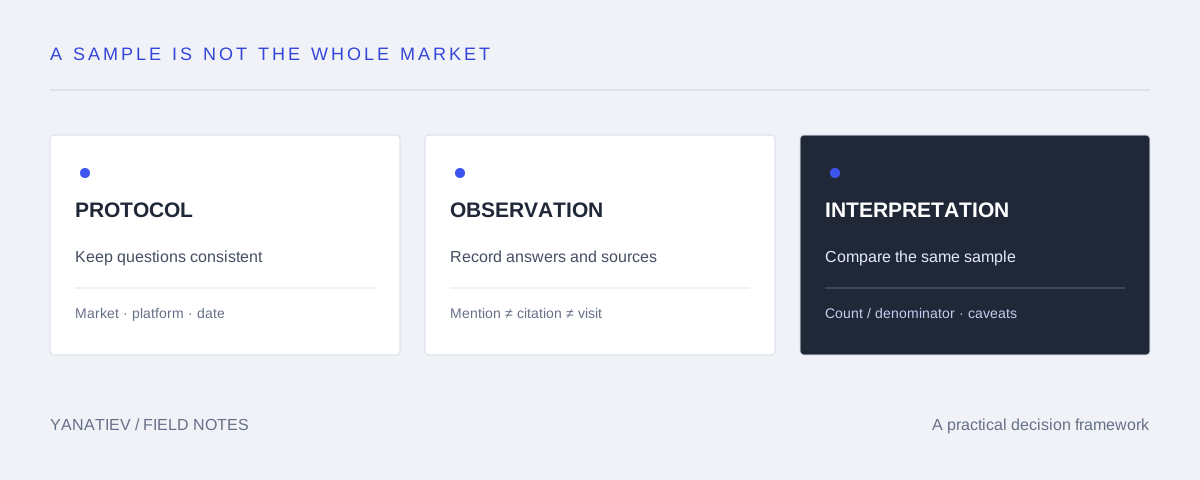
Build a small sample from real buyer tasks. Include problem exploration, evaluation criteria, comparisons and provider selection. Separate branded questions from non-branded ones; a prompt containing your company name naturally changes the likelihood of a mention.
For an illustrative SaaS project, a sample might include “How should a small team evaluate this category?” and “What implementation questions should we ask a vendor?” Specify the category and constraints. Keep the exact wording in the audit record.
Choose the markets and language. Record platform, model or mode where visible, account state, date and whether web retrieval is active. Some variables cannot be fully controlled. Write those limitations down instead of treating the test as laboratory evidence.
Capture the evidence, not just the score
For each observation, save the question, answer, mentioned brands, cited URLs and an accuracy note. Identify whether a link goes to your site or to a third-party page about you. A third-party citation can matter, but it is not a visit to your domain.
Repeat the same sample on an agreed cadence and, where practical, more than once per observation period. Keep the sample stable when comparing periods. If you add new questions, report the original sample and expanded sample separately.
Use metrics with explicit denominators
| Metric | Calculation | What it does not mean |
|---|---|---|
| Mention rate | Answers mentioning the brand ÷ eligible sampled answers | Share of every AI conversation |
| Owned citation rate | Answers linking to your domain ÷ eligible sampled answers | Referral visits or leads |
| Accuracy issue count | Recorded statements requiring correction | A complete audit of all model knowledge |
| AI referral enquiries | Accepted enquiries with an observed referral signal | All AI-influenced demand |
For example, 6 owned citations in 30 sampled answers equals a 20% citation rate for that sample. This is a hypothetical calculation, not a result from an audit of this website. Small samples can move sharply after only a few changed answers.
Inspect why a cited page is useful
Read the actual source. Does it provide a clear definition, a comparison table, original evidence, a documented workflow or a relevant case study? Identify the buyer task it satisfies. Do not infer a causal ranking factor merely because several cited pages share a layout feature.
Compare your own page against that task. A missing answer, unclear service scope or inaccessible document is an actionable finding. “The model prefers this domain” is usually too vague to guide implementation.
Choose improvements you can defend
Correct inaccurate or inconsistent descriptions of your business on pages you control. Explain service scope in plain language. Add useful examples and accessible evidence. Connect related pages with descriptive links. Check technical access before expanding content.
For external sources, prepare a factual correction or a useful contribution where appropriate. A citation strategy should not depend on fabricated endorsements, paid links disguised as editorial coverage or invented customer outcomes.
Connect the audit to business reporting
Keep ordinary search performance, sampled AI visibility and qualified enquiries side by side. Bing's AI Performance reporting can provide platform-specific citation information where available. Analytics may capture some AI referrals, but missing referrers and later direct visits make attribution incomplete.
Ask prospects how they discovered you, then retain both their answer and the technical source when available. If visibility rises without useful conversations, review the questions in your sample and the offer on the destination page.
What should an audit handover include?
Expect the question sample, collection conditions, evidence log, metric definitions, limitations and a prioritised action list. Each recommendation should name the affected page, the evidence behind it and the next verification step.
Read how SEO, AEO and GEO overlap before deciding how much of the roadmap is technical work, content work or measurement.
ESTABLISH YOUR BASELINE
See where the evidence points.
The existing GEO & AEO audit service explains scope and the questions to agree before starting.
Sources and limitations
Bing Webmaster Tools: AI Performance. Platform reporting and interfaces can change. This article proposes an audit method; it does not report a completed audit of yanatiev.com.