
Choose a SaaS SEO consultant by evaluating their understanding of your buyer, the relevance of their evidence and the practicality of their implementation plan. A ranking promise or a large keyword export is not enough to establish fit. You need to know who will make decisions, who will ship the work and how progress will be assessed.
This guide focuses on evaluating an individual consulting engagement. The existing in-house versus outsourced SEO article addresses the broader staffing decision.
Start with the problem you want help solving
Write a short brief before interviewing anyone. State the product, target buyer, priority market and business problem. Include your current publishing and development capacity. If you do not have reliable attribution, say so; building a baseline may be an early deliverable.
“We want more organic traffic” leaves too much undefined. “We want to understand why our integration pages attract visits but rarely lead to relevant demos” gives a consultant a concrete problem to investigate.
Ask how they connect search to the product
Use a live example from your website. Ask which buying question the page answers, what evidence is missing and what the reader should do next. A strong answer can include uncertainty and a request for product context. It should not assume that every problem requires more articles.
Ask how they would separate branded from non-branded demand and how they would avoid competing pages. Their explanation should be understandable to the person who will approve the work, not only to an SEO specialist.
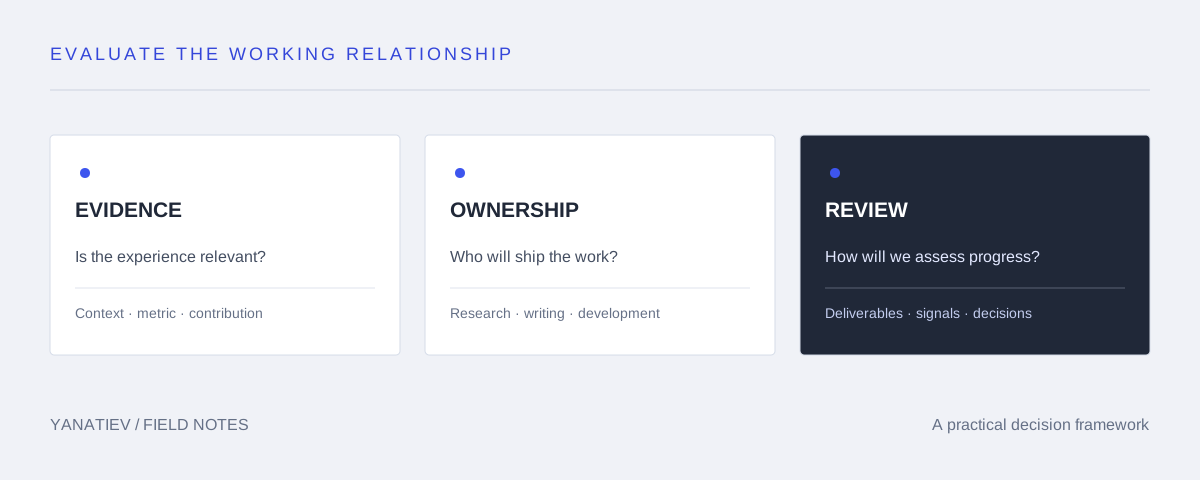
Review case studies in context
Look for the starting point, period, work performed and metric definition. Was the result measured in users, sessions, clicks or leads? Did other marketing activity happen at the same time? Which part of the work did the candidate actually own?
A relevant case study is evidence of experience, not a forecast. The Uptech case study on this site documents historical organic-user growth; your product, competition and implementation capacity will differ.
Request references or additional evidence through an appropriate private process when needed. Do not expect a consultant to disclose another client's confidential data to win your engagement.
Make implementation ownership explicit
| Workstream | Question to ask | Useful answer format |
|---|---|---|
| Research | Who chooses the target pages? | Named decision owner and review process |
| Writing | Who supplies expertise and approves claims? | Writer, expert and editor responsibilities |
| Development | Who implements and verifies fixes? | Developer capacity and acceptance criteria |
| Reporting | Who qualifies an enquiry? | Sales definition and source recording |
A consultant may be an excellent fit when you already have writers and developers. If you need a complete delivery team, the proposal must explain how that capacity will be provided and priced.
Use a small scorecard, then discuss the gaps
Score five areas from 0 to 2: product understanding, relevant evidence, prioritisation, ownership and measurement. Zero means the proposal has not addressed the area; one means it is partly clear; two means you have a specific, credible answer. This is an interview aid, not an objective certification.
Do not let the total hide a critical gap. A candidate with compelling case studies but no implementation plan may still leave your team with work it cannot deliver. Discuss the weakest area before making a decision.
Agree on the first review point
Define what will exist at the end of the first phase: a page map, a prioritised backlog, a set of briefs or verified fixes. Separate those deliverables from later search outcomes. Ask what would cause the plan to change and what access is required to evaluate it.
Review the commercial terms as carefully as the roadmap: scope, exclusions, review cadence, cancellation terms and ownership of the work. Confirm what happens if expert input or development capacity is delayed.
Questions worth asking before you start
- Which assumption about our buyers would you test first?
- What would make you recommend against a new article?
- How will you distinguish accepted enquiries from qualified opportunities?
- What work is excluded from this proposal?
- What would you need from our team each month?
The answers should leave you with a clearer working relationship. If the conversation relies on guaranteed placements, unexplained tactics or unverifiable results, ask for concrete evidence before proceeding.
ASSESS THE FIT
Bring your product, your priorities and your questions.
Review SaaS SEO consulting or start a conversation about the scope. For budget preparation, read the SaaS SEO budget guide.